
Carlsbad Kids & Screen Time: Is Nighttime Ortho-K Right for Your Child in CUSD?
School days in Carlsbad can involve hours of reading, laptop use, homework, and other close-up activities. For children who are already nearsighted, parents may notice that distance vision becomes blurrier or that eyeglass prescriptions continue getting stronger over time.
While screen time alone does not explain every case of childhood myopia, extended near work and limited time outdoors are among the factors associated with nearsightedness. For families in CUSD, nighttime orthokeratology, commonly called Ortho-K, may be one option for actively managing a child's progressing myopia.
At Beacon Optometry, we provide personalized myopia management to help Carlsbad families explore treatment based on their child's eyes, prescription, and lifestyle.
What Is Ortho-K?
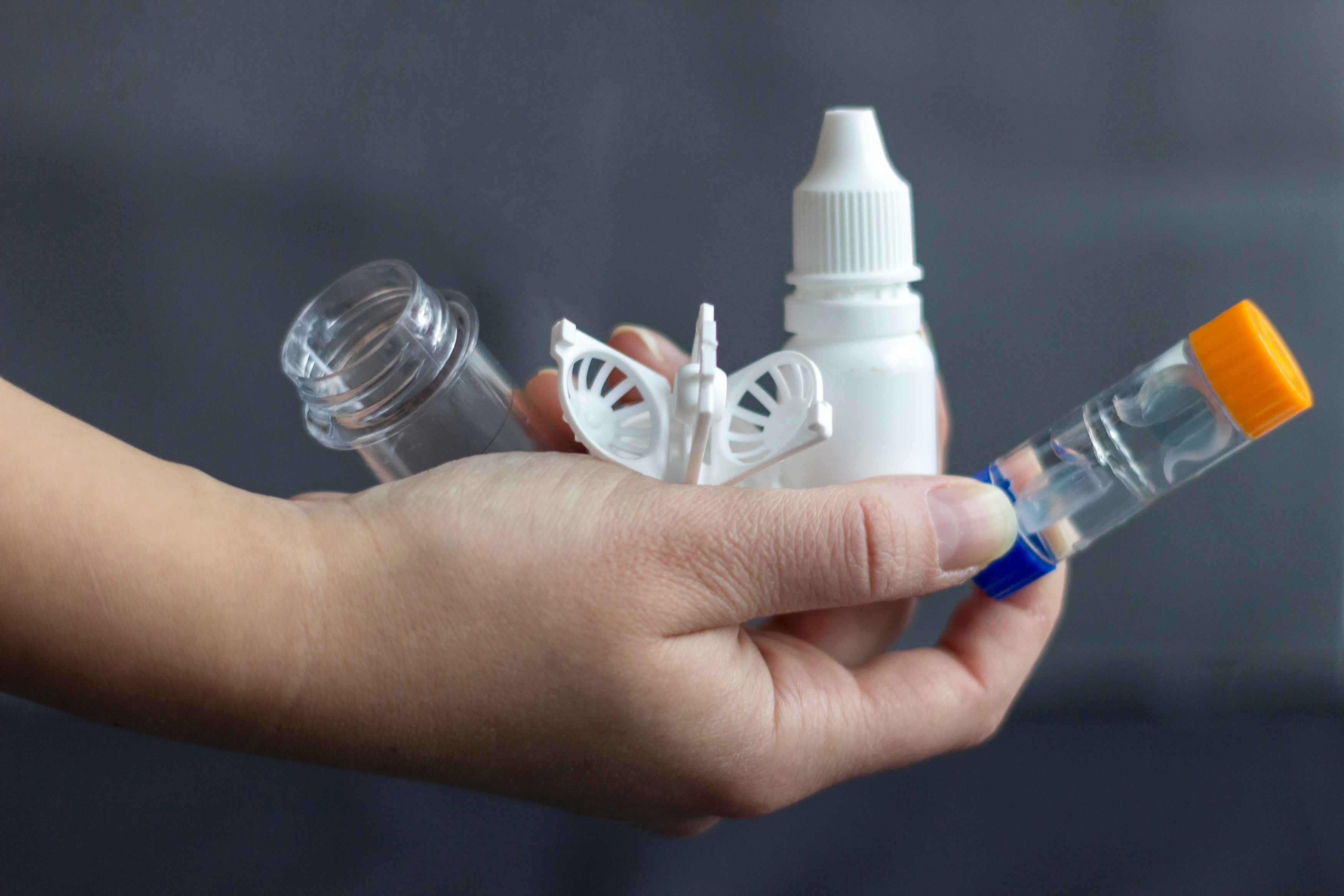
Ortho-K uses specially designed rigid contact lenses that a child wears while sleeping. The lenses gently and temporarily reshape the front surface of the eye, called the cornea.
In the morning, the lenses are removed. The temporary change in corneal shape can provide clearer distance vision during the day without glasses or daytime contact lenses.
The effect is reversible, so the lenses need to be worn consistently according to the prescribed schedule.
Why Use Ortho-K for Childhood Myopia?
Traditional glasses correct blurry distance vision, but they do not necessarily address how quickly a child's myopia is progressing. Ortho-K is used not only to provide daytime vision correction but also as a myopia management strategy designed to slow progression in appropriate children.
Potential advantages can include:
- Clearer daytime vision without glasses or contacts
- Myopia management during important childhood growth years
- Freedom from glasses during sports and other activities
- No daytime contact lenses to manage at school
- A non-surgical and reversible approach
- Customized lenses based on the child's prescription and corneal shape
For active Carlsbad students, the convenience of going through the school day without glasses or daytime contacts can be an added benefit.
What Does Screen Time Have to Do With Myopia?
Myopia develops through a combination of genetic and environmental factors. Children with nearsighted parents may have a greater likelihood of developing myopia, while lifestyle factors such as extensive near work and spending less time outdoors can also be relevant.
That does not mean parents need to eliminate screens completely. Digital devices are part of school and everyday life. Instead, encourage regular breaks from close work, appropriate viewing distances, and more time outdoors when possible.
If your child's distance prescription is already increasing, however, lifestyle changes alone may not be enough. This is where a professional myopia management evaluation becomes important.
Is Every Child a Good Candidate for Ortho-K?
Ortho-K is not automatically the right choice for every child. We consider prescription strength, corneal shape, eye health, age, maturity, and whether the child and parent can follow proper lens hygiene.
Because Ortho-K lenses are worn overnight, careful cleaning and handling are essential. Children should attend scheduled follow-up visits so we can monitor the fit of the lenses, eye health, vision, and changes in myopia.
Beacon Optometry also offers other approaches to myopia management, including specialty soft contact lenses and atropine. The best option depends on your child's individual needs rather than taking a one-size-fits-all approach.
When Should Parents Consider Myopia Management?
If your child is squinting at distant objects, struggling to see the board, moving closer to the television, or requiring stronger glasses at repeated eye exams, it may be time to discuss active myopia management.
Early evaluation is especially useful because childhood is an important period for monitoring progressive nearsightedness. Instead of simply updating glasses each year, we can assess how your child's vision is changing and discuss whether Ortho-K or another approach makes sense.
If your CUSD student's nearsightedness continues to progress, schedule a myopia management evaluation with Beacon Optometry at 7720 El Camino Real, Suite G, Carlsbad, CA 92009 by calling (760) 278-8068. We can determine whether nighttime Ortho-K is appropriate for your child and create a personalized plan to help manage their changing vision.


MAP
Powered by: 
